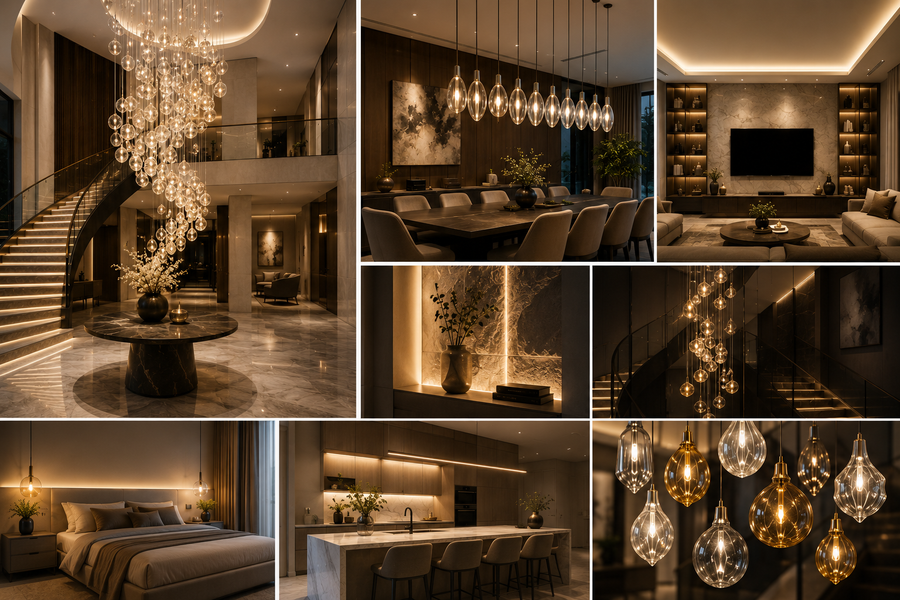

Two rooms can have the same furniture, paint and flooring yet feel completely different simply because of the lighting.
One of the key reasons is colour temperature.
When choosing lights, you may come across terms such as Warm White, Neutral White, Cool White, 3000K or 4000K. Understanding these terms can help you create the right atmosphere while ensuring your interiors look their best.
What Does “K” Mean?
Colour temperature is measured in Kelvin (K).
Generally, lower Kelvin values produce warmer, more golden light, while higher Kelvin values create whiter and eventually cooler, slightly bluish light.
As a simple guide:
- 2700K–3000K: Warm, soft and comfortable
- 3500K–4500K: Neutral, clean and balanced
- 5000K and above: Cool, crisp and daylight-like
There is no universally “best” colour temperature. The right choice depends on the purpose of the space, interior finishes and atmosphere you want to create.
Warm White: Comfort & Atmosphere
Warm white lighting is particularly popular in residential and hospitality interiors because it creates a soft, relaxing and welcoming environment.
It works especially well in:
- Bedrooms
- Living and drawing rooms
- Dining areas
- Lounges
- Restaurants
- Hotels and hospitality spaces
Warm light also complements wood, brass, gold finishes and natural materials beautifully, bringing out their warmth and character.
Neutral White: Clean & Versatile
Neutral white offers a balance between warmth and clarity. It can provide better visual definition without creating the distinctly cool appearance associated with higher colour temperatures.
It can be a good choice for:
- Kitchens
- Offices
- Retail stores
- Showrooms
- Bathrooms
- Workspaces
The ideal temperature will still depend on the room's materials, available daylight and intended use.
Cool White: Use It Deliberately
Cool white lighting creates a crisp, energetic and highly functional appearance. It can be appropriate for certain technical, industrial, medical and task-oriented environments.
Colour Temperature Isn't the Only Number That Matters
Another important specification is CRI (Colour Rendering Index).
CRI indicates how accurately colours appear under a light source. This is particularly important in:
- Retail stores
- Clothing displays
- Kitchens
- Art galleries
- Salons
- Showrooms
- High-end residential interiors
Beautiful marble, fabrics, wood and other finishes deserve lighting that allows their true colours, textures and details to be appreciated.
Consistency Matters
One common lighting mistake is mixing noticeably different colour temperatures within the same visual area without a deliberate design reason.
For example, if one part of a ceiling produces a warm yellow glow while another produces a bright white light, the overall space can look visually inconsistent.
Choosing a consistent colour temperature across connected areas helps create a more cohesive and professionally designed interior.
How to Choose the Right Colour Temperature
Before selecting a light, consider:
1. Atmosphere
Do you want the room to feel warm and relaxing or bright and energetic?
2. Materials
Wood, marble, fabrics, metals and paint colours can all look different under different lighting.
3. Function
A bedroom has different lighting requirements from a kitchen, office or showroom.
4. Natural Daylight
Consider how much daylight enters the space and how the artificial lighting will interact with it.
5. Architecture & Interior Design
Lighting should complement the overall design rather than being treated as an afterthought.
The Right Light Makes the Difference
Choosing lighting isn't simply about deciding between “yellow” and “white.”
The right colour temperature can completely change how a space looks, feels and functions. Combined with the right fixture, CRI, brightness, and placement, lighting becomes an important part of the interior design itself.
At Islamabad Lights, we believe selecting the fixture is only one part of choosing the right light.
How that light makes your space look and feel matters just as much.